Climate Economics Course: Redefining Conventional Practices

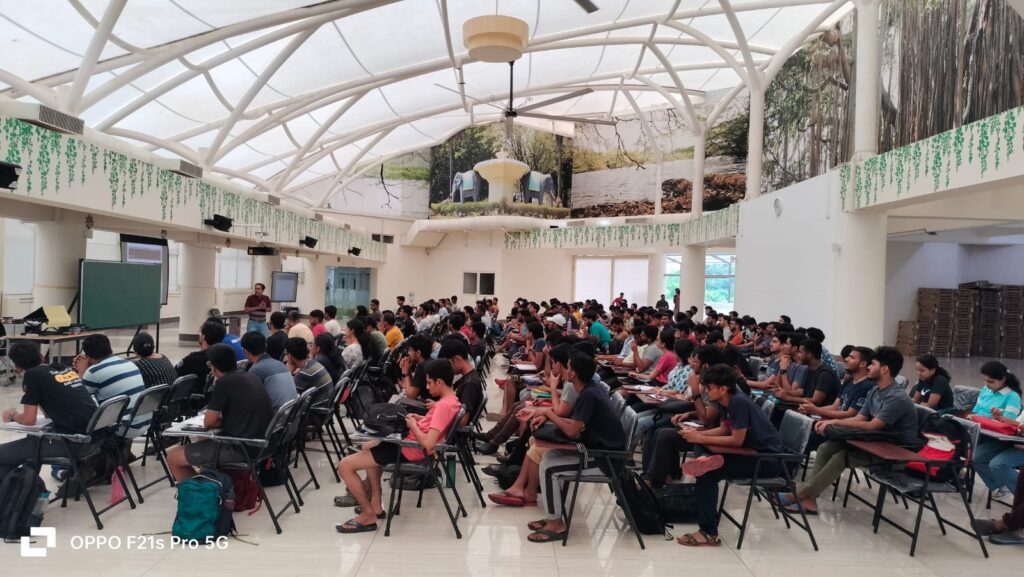
With a huge class and an unconventional classroom setup, it was a rather unusual day at IITM. The Terrace hall on the second floor of the Main Canteen was buzzing live. Around 246 students had gathered for the Climate Economics course (HS5760) handled by Santosh Kumar Sahu, Associate Professor, Humanities and Social Sciences. Climate studies […]

Climate Economics Course: Redefining Conventional Practices Read More Ā»

Blue economy and its bounteous benefits

On the World Maritime Day let’s pledge to work towards ensuring an inclusive and sustainable blue economy in India. This day serves to raise awareness about the significance of maritime industries and shipping, highlighting their vital contributions to the global economy, trade, and sustainable development. Blue economy refers to the sustainable use of ocean resources

Blue economy and its bounteous benefits Read More Ā»

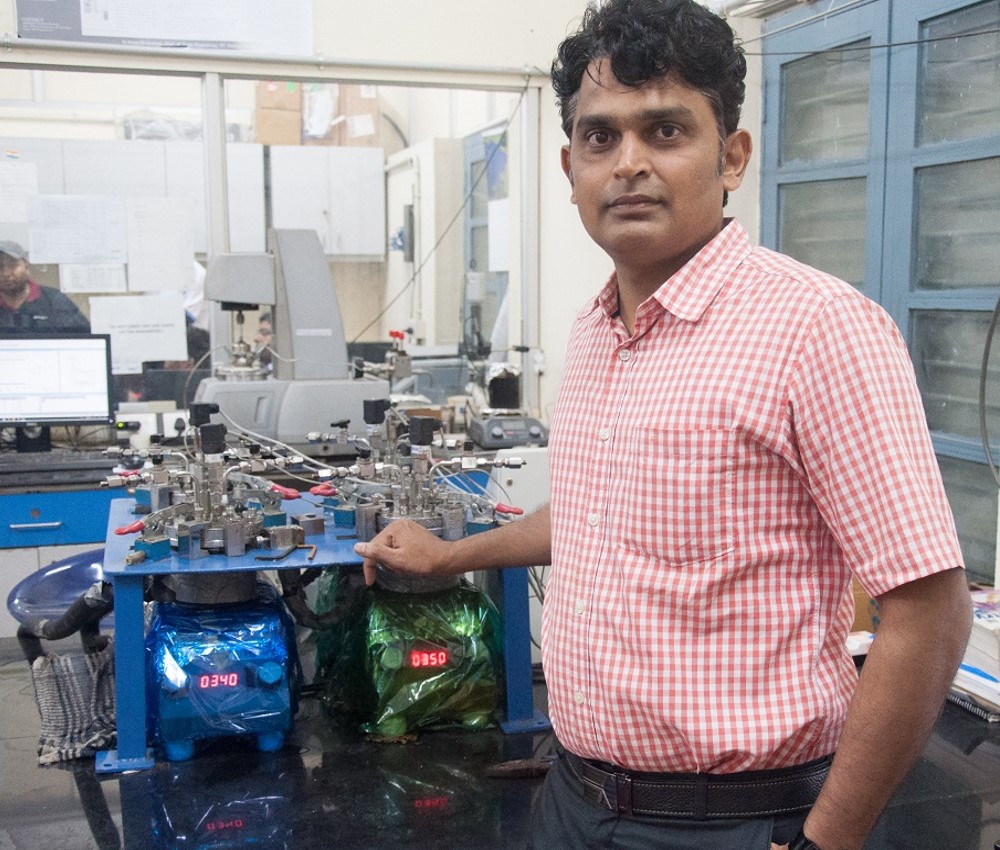
Advancing CO2 Capture Techniques: Insights from Dr. Jitendra Sangwai

After his recent honour of being awarded the Indian National Academy of Engineering (INAE) Fellowship, I met with Dr Jitendra Sangwai, Professor, Department of Chemical Engineering, IIT M. He holds several titles that pins him as either the first or the youngest! Excerpts from the interview Energy Consortium (EC): Congratulation on your INAE Fellowship. Could

Advancing CO2 Capture Techniques: Insights from Dr. Jitendra Sangwai Read More Ā»

Energy Independence and freedom fromĀ GHGĀ emissions

Energy Independence and freedom form GHG emissions, which we call net-zero is a pledge many countries, industries and some individuals have undertaken. However, the path to achieve these is far from clear. From the choices of technologies to incentives and policies, how to approach the net-zero transition is a problem of multi objective optimisation. While

Energy Independence and freedom fromĀ GHGĀ emissions Read More Ā»

The role of scientific computing in chemical engineering: developing clean energy technologies

Chemical Engineering has contributed significantly to shaping our lives for the past century. Developing a chemical process at the lab scale and taking it to the industrial scale is at the heart of Chemical Engineering. Out of the numerous chemical processes, perhaps converting crude oil into various chemicals and fuels that are the workhorse of

The role of scientific computing in chemical engineering: developing clean energy technologies Read More Ā»

Biofuels/Sustainable Aviation Fuels (SAFs) and Plasma-assisted Combustion Technology

In today’s world, there’s a pronounced emphasis on mitigating the carbon footprints and transitioning towards the sustainable energy sources. By 2022, aviation contributed 2% of global energy-related CO2 emission, experiencing a more rapid growth rate in recent years compared to rail, road, or shipping. Despite a temporary decline due to the COVID-19 pandemic, aviation emissions

Biofuels/Sustainable Aviation Fuels (SAFs) and Plasma-assisted Combustion Technology Read More Ā»

Battery Giga Factories and their Critical Raw Materials Problem

The world is changing rapidly due to an electric vehicle (EV) revolution that is currently underway. This is no longer an urban phenomenon or something that was long considered a pet project of developed nations. Various sectors such as; (i) Electronics and internet, (ii) logistics and transportation, (iii) agriculture and medicine, (iv) energy and infrastructure,

Battery Giga Factories and their Critical Raw Materials Problem Read More Ā»

Decarbonization of Industrial Process Heating using High-Temperature Heat Pumps

Decarbonization of Industrial Process Heating using High-Temperature Heat Pumps India’s heavy dependency on fossil fuels goes hand in hand with the nation’s substantial industrial demand for heating applications. As per the IEA 2021 report, India’s energy demand is set to rise by 35% between 2019 and 2030. Despite the increase in production and exploration of

Decarbonization of Industrial Process Heating using High-Temperature Heat Pumps Read More Ā»

Balancing the energy transition journey by being aspirational yet pragmatic

The renewable growth in India has been, generally speaking, phenomenal. The target of reaching 500 GW by 2030 may look dauting but with the 2023 year ending with ~134 GW installed capacity for renewable energy, excluding large hydropower, and with wind making up 44.7 GW and solar 73.3 GW of it, there is need to

Balancing the energy transition journey by being aspirational yet pragmatic Read More Ā»